
My dear friend Linda – whom my nine year old daughter automatically associates with chocolate brownies due to her enthusiasm whenever I bake a batch – is also a huge fan of pomegranates. Now this is a rather unusual fruit, certainly not one that is packed into school lunch boxes or eaten on the run like an apple or banana.
Pomegranates are especially high in vitamin C and dietary fibre and appear commonly throughout various cultural cuisines, including food from the Middle East, Mediterranean, North Africa, India and South East Asia.
After the leathery flesh is peeled away, a tightly packed collection of red jewel-coloured seeds glisten from beneath thin, creamy internal membranes which can be easily pulled away. It is best to wear gloves when removing the seeds because the juice stains terribly. I discovered this the hard way! I find it easiest to run my gloved fingers across the seeds while firmly tapping the outer side of the fruit and shaking the contents into a wide bowl.
I have always regarded it as an ancient, almost magical fruit that has managed to cross from storybook tales into the fruit bowl. Perhaps this is because of its central role in the seduction of Persephone by Hades into the underworld. This classic Greek myth was used to explain the changing of the seasons, whereby each seed swallowed by the unsuspecting Persephone represented another month spent in the underworld during which winter fell upon the human world above. A captivating story fit for this exotic fruit.
Pomegranates can be eaten raw, added to smoothies, baked goods and savoury dishes and made into vinegars and sticky sauces. Pomegranate molasses is one of these delectable sauces which featured in this evening’s meal.
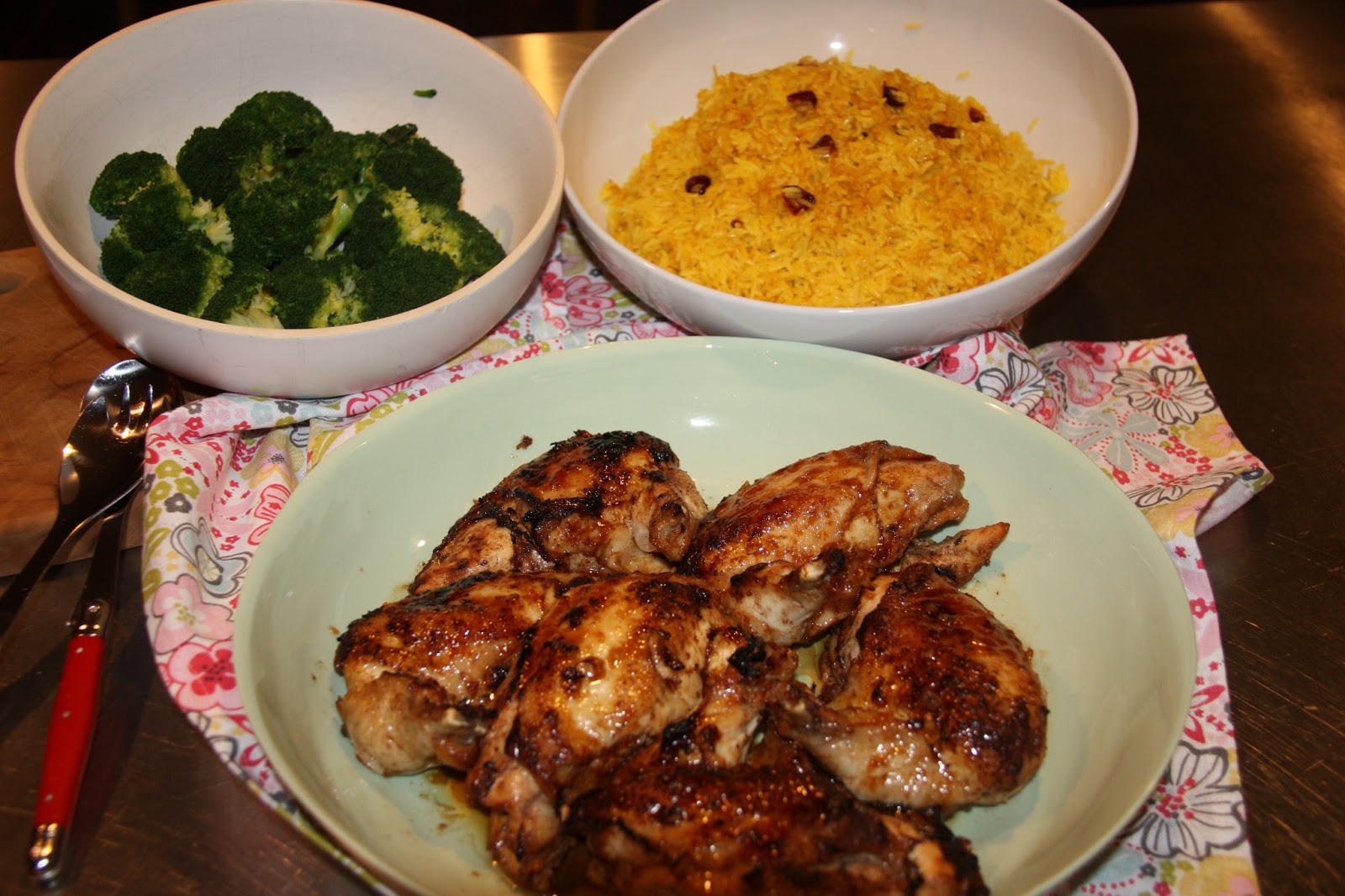
Karen Martini has a recipe in her cookbook, Cooking at Home, in which chicken is combined with pomegranate molasses and rosewater. Now I have made this recipe previously as part of a feast served at a family function and it disappeared off the serving platter very quickly. Although the pomegranate molasses is suppose to be drizzled over the cooked chicken just prior to serving, I had accidentally added some to the marinade when I originally made this dish. However, the result was a crisp, sticky finish on the chicken and I did the same again tonight. We ate this alongside buttery yellow Saffron Citrus Pilaf glistening with jewel-like dried cranberries and blanched broccoli with verjuice.
Karen’s recipe is designed to generously serve 2 people – I tripled this for my family. However, I have included the quantity for 2 only so that readers of my blog can use as is, or multiply the quantities as required.
Pomegranate Molasses Chicken – serves 2 people
Ingredients for the marinade
3 cloves garlic
1 1/2 teaspoons ground cinnamon
1/2 lemon, juice only
4 springs thyme leaves only
1 teaspoon freshly ground black pepper
sea salt to taste
4 tablespoons olive oil
120 ml rosewater (available from Middle Eastern food stores or well stocked Continental delicatessens such as the Norton Street Grocer, Leichhardt)
1.2 kg free-range chicken cut in half or chicken pieces (I used plump chicken supreme cuts – breast and wing with skin and bone)
3 tablespoons toasted almonds (I omitted this due to an allergy)
1 tablespoon pomegranate molasses (I added this to the original recipe)
Place all the ingredients except for the olive oil and rosewater into a food processor or mortar and pestle and crush to a paste. Transfer to a large bowl, add the olive oil and rosewater along with the chicken and mix until combined. Cover with plastic wrap and refrigerate until needed.
This can be cooked on the barbecue or in the oven. I opted for the latter. Preheat the oven to 200 degrees fan forced. First sear the chicken in a hot pan with a little oil, on both sides. Then transfer into a large baking pan and and roast the chicken for about 30 minutes.
Once the chicken is ready, transfer to a serving platter and drizzle over the dressing – recipe below.
Sweet Aromatic Dressing
Ingredients
1 1/2 small red chillies (less or omit if serving this to young children)
3 tablespoons pomegranate molasses
1/2 teaspoon ground cinnamon
1/2 clove garlic crushed
1 tablespoon rosewater
4 tablespoons olive oil
1 teaspoons caster sugar
Place all ingredients into a jar, shake thoroughly and our over the hot chicken.
Garnish with watercress, mint leaves or even fresh rose petals for a special effect.
Saffron Citrus Pilaf to serve 8 people
Ingredients
100 g unsalted butter
10 cardamom pods, split
finely grated rind of half an orange
3 cups long grain rice or basmati rice
3 good pinches of saffron soaked in a couple of tablespoons of boiling water prior to commencing the pilaf in order to release the flavour and colour.
1 tablespoon dried cranberries
good grind of sea salt to taste
4 1/2 cups cold water
In a large pot, melt the butter over a medium heat and add the cardamom pods and orange rind. When you can smell the sweet aroma, add the rice and stir until it starts to turn opaque. Take care not to let it burn!
Add the saffron and the liquid in which it has been soaking, along with the dried cranberries, salt and cold water. Cover the rice with a piece of baking paper so that the paper sits right against the mixture. This helps the rice to steam and prevents it from drying out. Cover with the lid of the pot.
Bring to the boil, then immediately reduce the heat to low and cook for about 10 minutes or until the rice is just done. You don’t want mushy rice, rather a slight bite to the grains.
Gently scrape the rice out of the pot and into a serving dish and fluff up with a fork.
Serve with your choice of blanched veggies (we enjoyed deep green broccoli drizzled with verjuice or lemon juice, just perfect) and the Pomegranate Molasses Chicken with generous dollops of thick, plain yoghurt.
Comments are closed here.