
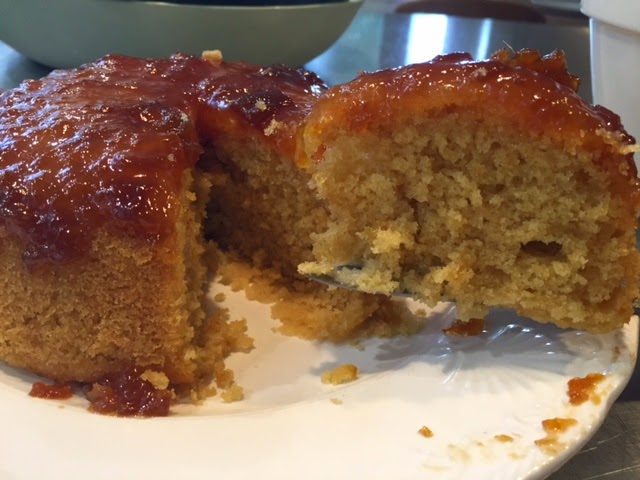
Rainy days and chilly nights call for home cooked comfort food, just like this moist Marguerite Pudding. Scented with vanilla and a touch of lemon, with rich fruity jam dribbling down the sides, this is an old-fashioned dessert, best served with warm custard.
Unlike a traditional butter cake which is baked in the oven, a steamed pudding cooks to perfection on the stove-top, nestled within a large pot half filled with boiling water.
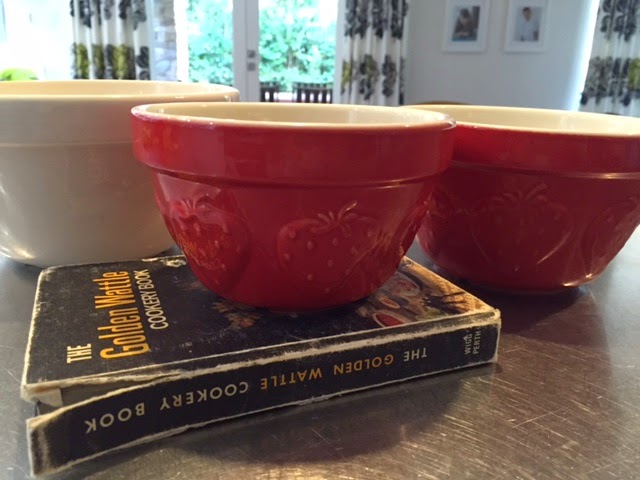
I have fond memories of making this exact pudding with my mum when I was growing up in Perth, and feeling thrilled to be leafing through her old high school home economics text, The Golden Wattle Cookery Book. This publication promoted itself as being designed to equip girls with “culinary skills” and an “interest in cookery” after they have left school. Note, there was absolutely no mention of young men and cooking in the same sentence! Not only has this text disappeared from the current Australian school curriculum, so has the subject that I too, called “Home Ec(onomics).
The original version was published in 1926 which explains why the recipes featured fewer and far more basic ingredients than found in today’s cookbooks. Although the sweets sound appealing such as Apple Charlotte, Caramel Custard and Ginger Snaps, there are several unappetising savoury recipe choices. My children eat a wide variety of foods, but I can’t quite imagine them wanting to wolf down Fricassee of Brains or cabbage boiled for 20 minutes. Actually I wouldn’t even want to eat that for dinner! There is even an entire chapter on “Invalid Cooking”; essentially basic, pureed and very soft foods for the elderly or infirm. Completely unappetising but printed with an introductory note, recommending the dishes be served “daintily” with “hot foods served very hot” and “cold foods served very cold”. So much for catering to the individual.
This cookbook must have made an impression on my mother because she once tried to slip a styrofoam tray of ox tongue into the supermarket trolley in an attempt to make crumbed tongue when I was in primary school. Luckily my brothers and I spotted the offending bumpy pink item and removed it before we reached the check-out. Mum was so distracted by my brothers doing tumble turns down the aisle that she didn’t notice it was missing. I haven’t even seen ox tongue for sale in the major supermarkets now days. Reading through vintage cookbooks really helps me to understand how the food landscape has changed in a relatively short time frame. At least there is still a spot for sweet and sticky steamed puddings.
My Childhood Favourite, Steamed Marguerite Pudding
To serve 8 to 10.
60 grams unsalted butter
60 grams caster sugar
1 teaspoon vanilla essence (I added this to the recipe)
1 teaspoon finely grated lemon rind
1 large egg
120 grams self raising flour
2 tablespoons milk
2 tablespoons of your favourite jam (I used peach)
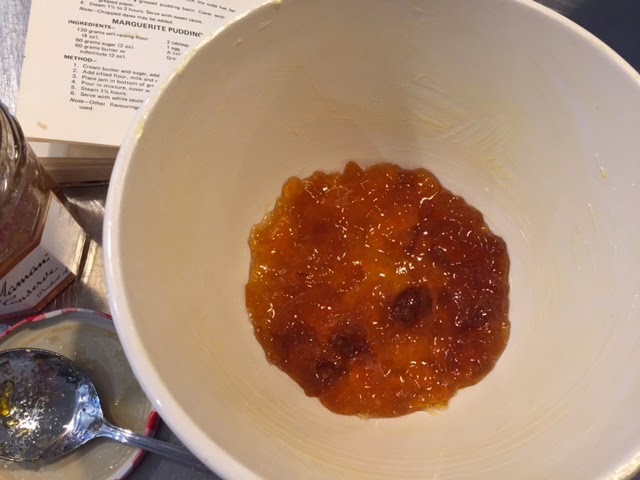
Grease the base and sides of a ceramic pudding basin with butter. Spoon jam evenly into the base. Set aside.
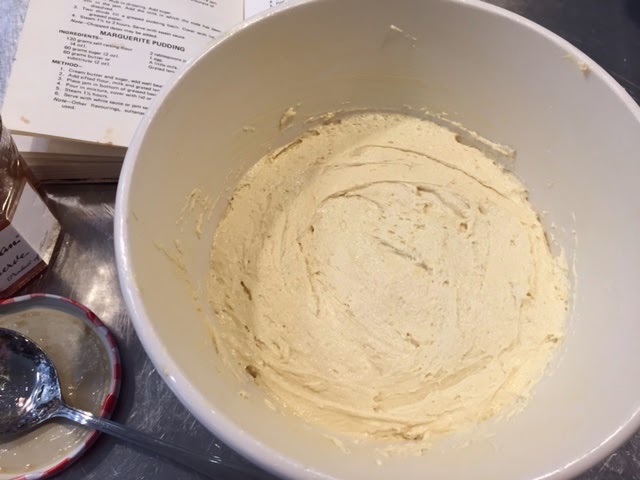
Cream the butter and sugar in a bowl with an electric mixer until pale.
Add the vanilla, lemon rind and egg and beat again until combined.
Add the flour and milk and beat until smooth.
Scrape the batter into your prepared pudding basin. It should come about between 1/2 and 2/3 up the side of the dish.
Cover the top of the pudding basin with greaseproof or baking paper, making sure that it overhangs the sides by about 3 centimetres. Tie kitchen string firmly around the edges of the paper so that it forms a tight paper lid.
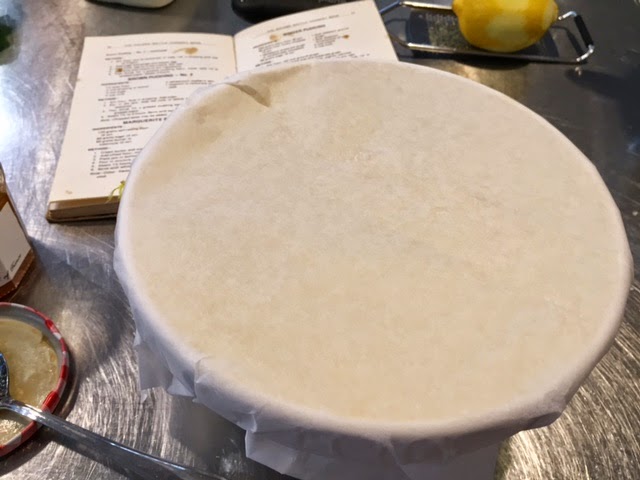
Place the covered pudding basin into a large pot and carefully pour in boiling water from the kettle so that it comes about half way up the sides of the dish. Put on the lid of the pot and turn on the heat to a medium setting. The water should be bubbling throughout the streaming process which will take 90 minutes. Do not pierce the paper lid or lift it to check on the batter. Top up the water half way though with more boiling water from the kettle.
After 90 minutes, remove the pudding basin which will be very hot. Remove the paper lid and allow the cooked pudding to sit for 10 minutes before turning upside down onto a serving plate. Slice generously and serve warm.

Comments are closed here.